
Fertilization
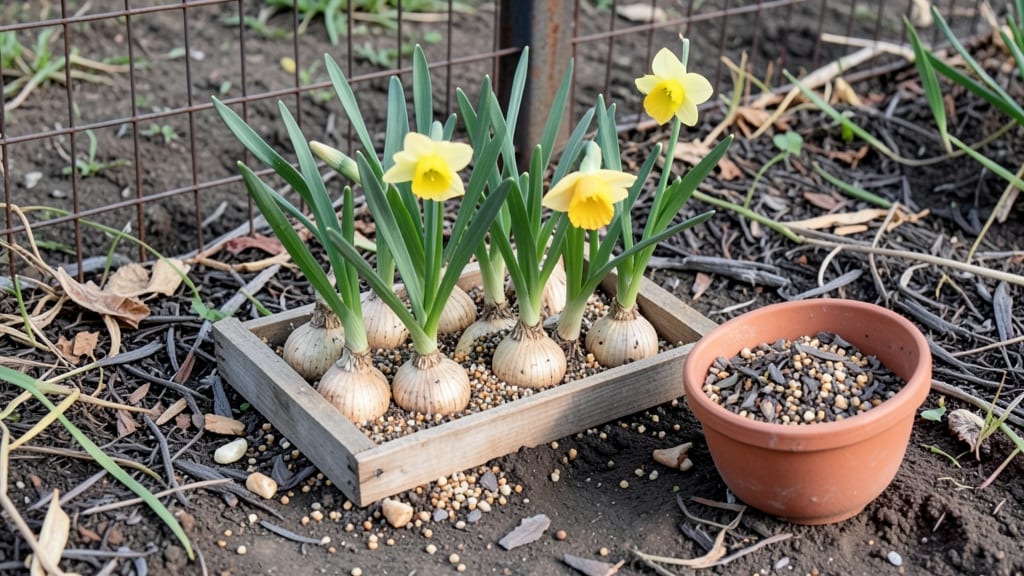
Bulb food for daffodils should include a balanced, low-nitrogen fertilizer like bone meal or composted manure during early spring growth, followed by a potassium-rich feed in late summer to support next year’s blooms. Avoid high-nitrogen fertilizers that encourage leafy growth over flowers.
Daffodils thrive when fed the right nutrients at the right time—think of it like a seasonal meal plan for your plants. 🌱 In early spring, they need gentle, nutrient-rich food like bone meal to kickstart root growth, while late summer’s potassium push (from sources like wood ash or banana peels) strengthens the bulb for next year’s show.
The key is avoiding heavy nitrogen, which makes them grow leaves instead of flowers, and opting for slow-release organic options that feed steadily without burning delicate roots.
My go-to organic mix starts with a 1-inch layer of compost around the base in fall, followed by a 1 tablespoon of bone meal per bulb in early spring. For potassium, I crush banana peels into the soil in late summer—they’re a natural, zero-waste way to boost blooming potential.
The secret? Consistency over excess—daffodils store energy in their bulbs, so feeding too much can actually weaken their long-term health.
💡 In This Article
- How Daffodil Bulbs Absorb Nutrients Over Seasons
- Organic Fertilizer Guide for Daffodil Bulbs
How daffodil bulbs absorb nutrients over seasons
Daffodil bulbs follow a precise nutrient absorption cycle tied to their natural growth phases. In late fall, as temperatures drop below 50°F, the bulbs focus on developing fine root hairs that will later anchor them in spring.
These roots absorb phosphorus from the soil, stored as energy reserves for early growth—a process called vernalization. Think of it like a plant version of hibernation prep, where the bulb builds up its "winter savings account" for the coming season. 🌱
The real feeding frenzy happens in early spring when nitrogen becomes critical. Daffodils need this nutrient to produce chlorophyll for leaf growth, but too much can shift energy away from flower buds.
Organic sources like fish emulsion (which contains 5-1-1 NPK ratio) or worm castings release nitrogen gradually over 4-6 weeks, preventing sudden spikes that burn roots. The bulbs also pull potassium from the soil at this stage, which helps regulate water uptake and disease resistance.
What most gardeners miss is that daffodils actually stop absorbing nitrogen by mid-May—after that, extra nitrogen just makes them grow leaves instead of flowers.
By late summer, daffodil bulbs shift their focus to potassium accumulation, which strengthens cell walls and prepares the bulb for dormancy. This is why a potassium-rich feed (like wood ash or kelp meal) applied in August leads to bigger, more vibrant blooms next year.
The bulbs also pull calcium from the soil now, which prevents rot and supports root development. Here's the science: Potassium helps the bulb store starch reserves—up to 30% of its dry weight—that will fuel next spring's growth. Without this late-season boost, bulbs often produce fewer, weaker flowers.
Organic fertilizers like bone meal (which contains 3-15-0 NPK) work perfectly because they release phosphorus slowly, matching the bulb's natural uptake cycle. When you sprinkle 1 tablespoon per bulb in early spring, the phosphorus dissolves over 2-3 months, giving roots exactly what they need without overwhelming the plant.
The key difference with synthetic fertilizers? Organic options also improve soil structure, encouraging beneficial microbes that help break down nutrients into forms the bulbs can absorb. 💫
What most people don't realize is that daffodil bulbs have a natural feedback loop for nutrients. If they get too much nitrogen late in the season, they'll produce extra leaves but skip flowering entirely—this is called bolting.
The bulbs prioritize flower production when they sense balanced nutrition, which is why a low-nitrogen, high-phosphorus approach in spring yields the best results.
Even the timing matters: Applying fertilizer when soil temperatures are below 55°F can stunt root growth because microbes that break down organic matter become less active in cold soil.
For a visual example, imagine a daffodil bulb like a three-phase battery:
- Fall: Charges with phosphorus (root development)
- Spring: Uses nitrogen for leaf growth (but stops by May)
- Summer: Stores potassium for next year's blooms
Pro tip: If your daffodils produce lots of leaves but few flowers, it's a sign they're getting too much nitrogen. The solution? Switch to a phosphorus-rich fertilizer like rock phosphate (0-3-0 NPK) in early spring and add a potassium boost in late summer.
This two-phase approach mirrors how daffodils would naturally feed in their Mediterranean native habitat, where winter rains leach away excess nitrogen, leaving phosphorus and potassium dominant in the soil. ✨