
Flowers
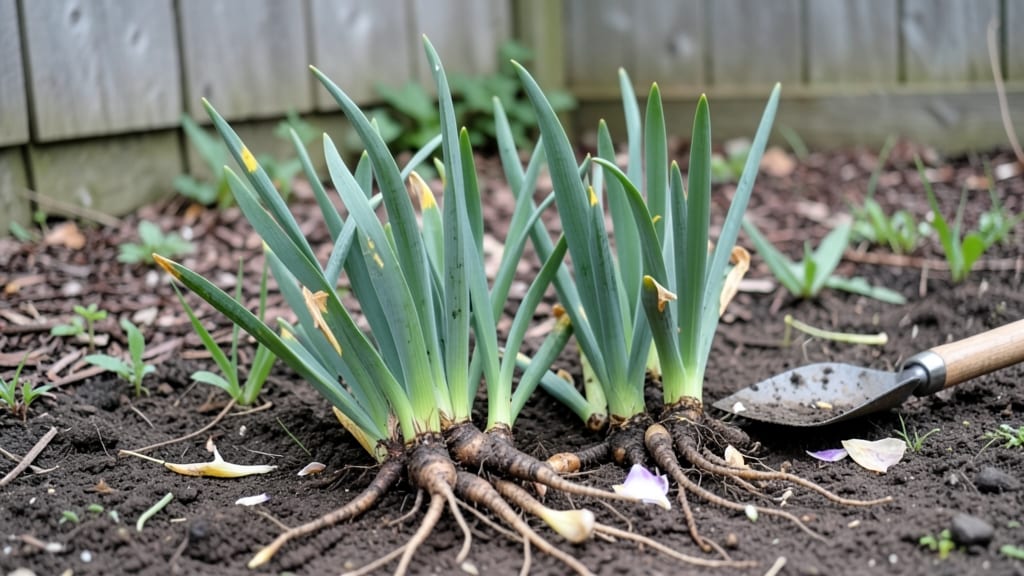
Timing matters because iris plants follow a natural dormancy cycle—once the leaves turn yellow and wilt, it’s their body’s way of telling you the bulbs have finished storing energy for next year’s blooms. 🌿 In warmer climates, aim for late summer (August-September), while cooler regions may need to wait until early fall (October-November) to avoid premature dormancy.
Missing this window risks weakening the bulb’s reserves or triggering early sprouting during storage.
💡 In This Article
- Iris Bulb Growth Cycle and Dormancy Phases
- Step-by-Step Guide to Safely Digging Iris Bulbs
Iris bulb growth cycle and dormancy phases
Here's what's actually happening when iris leaves turn yellow: the plant is entering its natural dormancy phase, a biological process where energy reserves migrate from the foliage into the underground bulb.
This nutrient translocation occurs through specialized cells called companion cells that transport sugars and starches from the leaves into the bulb's storage tissues. The yellowing is essentially the plant's way of saying, "I've saved enough energy for next year!" 🌱
The optimal timing—late summer to early fall—aligns with this biological clock. In USDA Hardiness Zones 3-6 (northern regions), this typically means waiting until after the first frost when foliage has completely died back. Meanwhile, in Zones 7-10 (warmer climates), the window shifts earlier to avoid the bulb entering premature dormancy.
The key difference is temperature: cooler regions need the bulb to complete its nutrient storage before winter, while warmer climates can trigger dormancy earlier.
What most people don't realize is that iris bulbs are actually rhizomes (horizontal underground stems), not true bulbs. This affects their dormancy differently—they store nutrients in their thickened root system rather than in concentric layers like tulips.
The rhizome's growth point remains active until the foliage fully senesces, which is why you must wait until the leaves are completely brown and crispy before digging. 💡
Climate plays a crucial role in this timing. In the Pacific Northwest, for example, you might dig in early September when daytime temperatures average 70°F but nights drop below 55°F.
Meanwhile, in the Deep South, the window closes by mid-August when humidity spikes above 80%—high moisture accelerates fungal risks during storage. The goal is to harvest when the plant has finished its energy transfer but before it enters true dormancy.
Interestingly, iris bulbs can survive with minimal care during dormancy, but their long-term health depends on proper timing. If you dig too early (when foliage is still green), you're essentially starving the bulb by removing its energy source.
Conversely, waiting too late risks the bulb using up its reserves during winter. The sweet spot is when 60-70% of foliage has died back, leaving just a few brown stems—this ensures maximum nutrient storage while avoiding dormancy stress.
The biological mechanism behind this involves two key hormones: abscisic acid (ABA) and gibberellins. As daylight shortens in late summer, ABA levels rise, triggering leaf senescence (the yellowing process).
Simultaneously, gibberellins decrease, halting new growth. This hormonal shift creates the perfect window for bulb harvest—when the plant has stopped growing but hasn't yet entered full dormancy. 🌿
For gardeners in transitional climates (like Zone 7), pay attention to your local frost dates. A good rule of thumb is to dig 4-6 weeks before your first expected frost date.
This gives the bulb time to establish its winter reserves while avoiding the shock of sudden temperature drops during storage. The result? Stronger, more vigorous regrowth when you replant in spring.