
Flowers
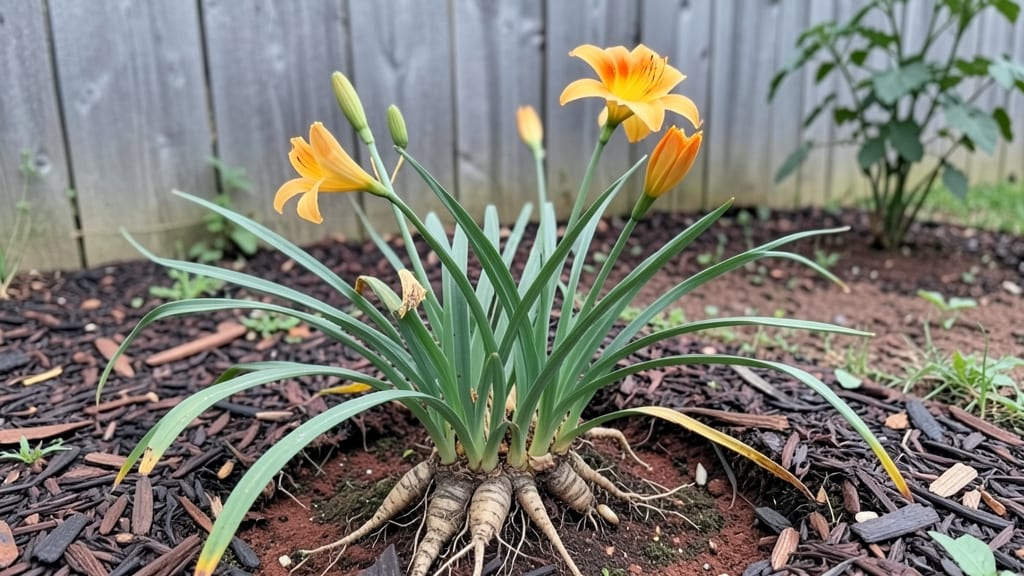
Daylilies are not bulbs—they grow from thick, fleshy rhizomes underground, which store nutrients and spread horizontally. Unlike true bulbs, they multiply aggressively and thrive in USDA zones 3-9 with minimal winter care.
Daylilies rely on their rhizomes—those thick, knobby roots—to store energy and fuel rapid growth above ground. Unlike true bulbs, which grow vertically and store nutrients in layered scales, daylily rhizomes spread horizontally, creating dense colonies over time.
This unique structure is why they’re so hardy in USDA zones 3-9, as they naturally adapt to seasonal changes without needing winter protection.
What makes them stand out is their aggressive multiplication: a single rhizome can produce multiple shoots, filling garden spaces quickly. This trait also means they’re perfect for naturalizing in borders or meadows, where their resilience and low-maintenance nature shine.
Just be prepared for them to outgrow their welcome if not managed!
💡 In This Article
- How Daylily Rhizomes Differ From True Bulbs
- Planting and Caring for Daylily Rhizomes
How daylily rhizomes differ from true bulbs
Here's what sets daylily rhizomes apart from true bulbs like tulips or onions: while bulbs store nutrients in concentric layers (like an onion's rings), daylily rhizomes are thick, horizontal underground stems that spread outward.
These rhizomes contain vascular tissue that transports water and nutrients between the plant's roots and shoots, creating a continuous energy highway. True bulbs, however, rely on modified leaves (scales) that store food in a vertical structure—think of a daffodil bulb's layered papery skins.
The key difference lies in their growth patterns: daylily rhizomes elongate horizontally, producing new shoots at nodes along their length, while bulbs grow vertically, sending up a single stem each season.
This horizontal spread explains why daylilies form dense colonies—each rhizome can produce 3-5 new shoots annually, compared to a bulb's single stem. The rhizomes also develop eyes (growth points) that remain dormant until conditions are right, allowing them to survive harsh winters in zones 3-9 without protection.
What most gardeners don't realize is how rhizomes store energy differently. True bulbs accumulate nutrients in their scales during the growing season, while daylily rhizomes distribute energy throughout their length, making them more resilient to drought and temperature fluctuations.
This is why daylilies thrive in full sun (6+ hours daily) while many bulbs prefer partial shade—rhizomes can absorb sunlight through their green, above-ground stems even when roots are dormant.
Seasonal cycles reveal another critical difference: bulbs enter dormancy completely, with all energy stored underground, while daylily rhizomes maintain partial activity even in winter.
In cold climates, they develop a protective layer of corky tissue that insulates growth points, allowing them to resume growth as soon as temperatures rise above 40°F. This adaptability is why daylilies naturalize so easily—they're not just surviving winters, they're preparing for spring's return.
Consider this comparison: a 1-inch diameter daylily rhizome might produce 6-8 new shoots in its first growing season, while a tulip bulb of similar size would yield just 1-2 flowers.
The rhizome's ability to fragment and regenerate from even small pieces (as little as 1/4-inch thick) gives daylilies their legendary hardiness. This is why gardeners often divide clumps every 3-5 years—not to control growth, but to maintain vigor by preventing rhizomes from becoming overcrowded.
For visual learners, imagine a spider's web underground: that's how daylily rhizomes spread. Each year, the web expands outward, with new "legs" (rhizomes) radiating from the center. True bulbs, by contrast, grow like tree trunks, adding layers vertically rather than spreading horizontally.
This structural difference explains why daylilies fill spaces so quickly—and why they're the perfect choice for low-maintenance gardens where you want lush color without constant digging.